
Boosting Productivity in Manufacturing: The Role of Conveyors and Efficient Storage Solutions
In the fast-paced world of modern manufacturing, every minute counts. Downtime on the production line can quickly add up to significant losses, while inefficient material flow leads to bottlenecks, worker fatigue, and wasted effort. Many UK manufacturers are discovering that the real gains come not from isolated upgrades, but from thoughtfully integrating conveyor systems with smart storage solutions. When these elements work together seamlessly, the results can be transformative: reduced downtime, higher throughput, and far less manual handling.

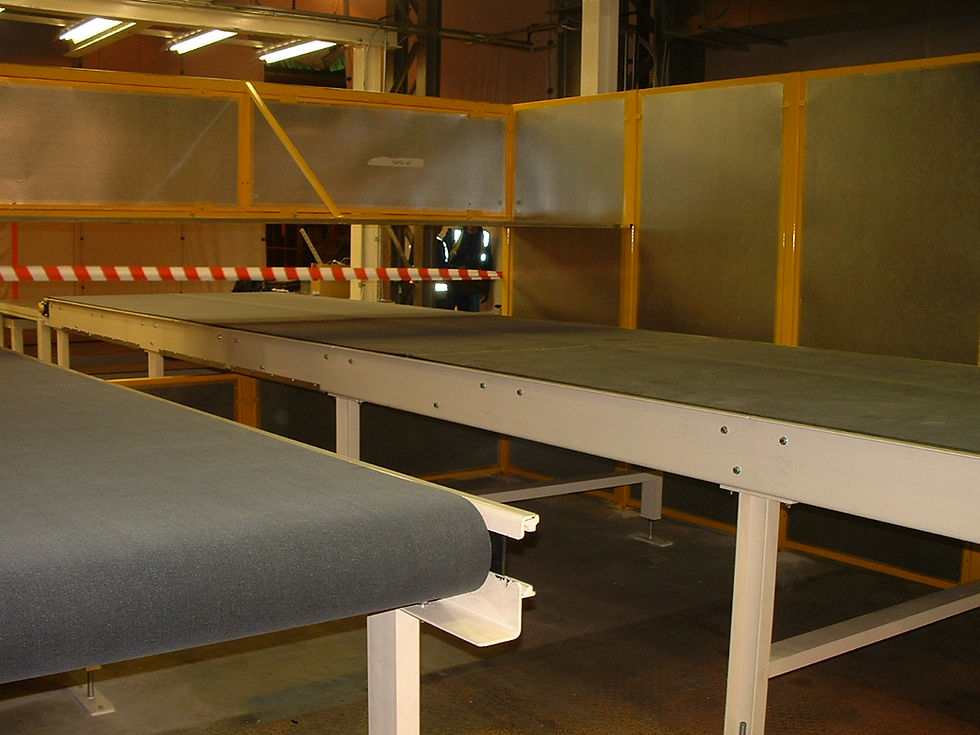
Conveyors handle the movement of parts and products automatically, taking the strain off operators and ensuring a steady, reliable flow through the facility. Pair that with well-organised storage—think slanted shelving for easy access, robust pallet racking for bulk items, secure cages for valuable components, and protective packaging supplies—and you create a system where materials arrive exactly where they're needed, when they're needed, with minimal disruption.
Consider a typical scenario in an automotive parts manufacturer. Assembly lines often suffer from delays as workers manually fetch components from disorganised racks or transport heavy items across the floor. By installing custom roller or belt conveyors that link directly to production stations, parts move automatically from storage to the line. Adding organised wire shelving and roll-out pallet racks nearby means components are stored in a logical, ergonomic way—reducing search time and the risk of damage. Secure cages protect high-value items, while quality packaging supplies like bubble wrap or edge protectors prevent issues during handling.
Manufacturers implementing similar setups have reported reductions in manual handling of up to 60%, with downtime dropping noticeably as the flow becomes more predictable.
In food and beverage processing, the benefits are even clearer. Bottlenecks often occur when products move slowly from production to storage, leading to waste or quality issues. Chain conveyors can transport items smoothly to can racks or mobile shelving units, where they're stored securely and accessed quickly for packing. Integrating foam cushioning and strapping materials right at the point of use further minimises breakage. Facilities that have adopted this integrated approach often see improved order fulfilment speeds and a marked drop in product damage, all while keeping labour focused on higher-value tasks rather than repetitive lifting.
What makes these integrations so effective is the focus on innovative techniques drawn from lean principles. Using modular, custom-designed conveyors allows for precise alignment with existing layouts, avoiding the one-size-fits-all pitfalls that can create new problems. Techniques like buffer zones on accumulation conveyors prevent backups, while vertical storage options optimise floor space without expanding the building footprint. Predictive maintenance on conveyors, combined with organised storage that makes inspections easier, further cuts unplanned stops. The outcome is a closed-loop system: materials flow efficiently, inventory is always visible and accessible, and the entire operation runs smoother.
The advantages extend beyond immediate gains. Reduced manual handling improves workplace safety and lowers the risk of injuries, which is crucial in any manufacturing environment. Labour costs tend to stabilise as workers shift from transport duties to more skilled roles, and space optimisation often frees up room for additional production capacity. Many operations also report better overall throughput—sometimes by 20-30%—simply because the material flow no longer holds everything back.
Of course, achieving this requires careful planning. Start with a thorough audit of your current material flow to identify pain points, then bring in specialists early to design a solution that fits your specific needs. Modular systems offer flexibility for future changes, and investing in quality equipment ensures longevity and minimal maintenance demands.
If your manufacturing setup could benefit from smoother material flow and better organisation, exploring tailored storage and handling options is a strong next step.


Comments