
Building Resilient E-Commerce with Conveyor Automation
The UK e-commerce landscape continues to evolve, placing sustained operational pressure on fulfilment centres. Order volumes fluctuate seasonally, delivery expectations remain high, and workforce availability can vary regionally. In this environment, warehouse design is no longer simply about storage capacity — it is about operational resilience.
For many operators, conveyor automation has become a practical and measured step toward building that resilience.
Moving Beyond the “Automation Hype”
Automation in warehousing is often associated with large-scale robotics and complex AI systems. While those technologies have their place, effective automation strategies frequently begin with something more foundational: material flow.
Before introducing advanced robotics, high-performing fulfilment centres typically address one core issue — how goods move through the building.
Manual internal transport between receiving, storage, picking, packing, and dispatch can consume significant time and introduce variability. Conveyor systems offer a structured way to manage this movement, supporting consistency and predictability across the operation.
Workforce Stability and Task Optimisation
Across the logistics sector, many businesses report ongoing recruitment and retention challenges. While the causes vary, one consistent theme is the physical and repetitive nature of certain warehouse tasks.
Conveyor systems do not replace operational expertise; rather, they reduce reliance on low-value internal walking and manual transfer. This can allow teams to focus on:
Quality control and exception handling
Customer service-related processes
Inventory accuracy
Continuous improvement initiatives
By optimising task allocation, businesses can improve workflow stability without fundamentally changing their workforce structure.
Designing for Flow, Not Just Speed
In e-commerce fulfilment, performance is often limited not by picking speed, but by bottlenecks between process stages.
Well-designed conveyor systems support:
Controlled product accumulation
Consistent transfer between zones
Reduced manual re-handling
Integration with barcode scanning and warehouse management systems
The objective is not simply faster movement — it is predictable, traceable flow.
When integrated correctly, conveyors can contribute to improved order accuracy and reduced product handling variation. Outcomes depend on specification, layout design, and system integration.
Making Better Use of Warehouse Space
Warehouse space represents both a cost centre and a throughput constraint. Increasing output without expanding footprint is a common priority.
Conveyor infrastructure can support space optimisation by:
Reducing aisle congestion
Enabling overhead or multi-level routing
Creating defined workflow pathways
Supporting modular expansion as volumes increase
Rather than viewing conveyors purely as transport equipment, many operators now treat them as structural elements of facility design.
Selecting the Right Conveyor Technology
System design should always reflect product characteristics and operational requirements. Common conveyor types used in e-commerce environments include:
Often used for cartons and totes, powered roller systems allow zoned accumulation and controlled product flow. They are frequently selected where integration with scanning or routing systems is required.
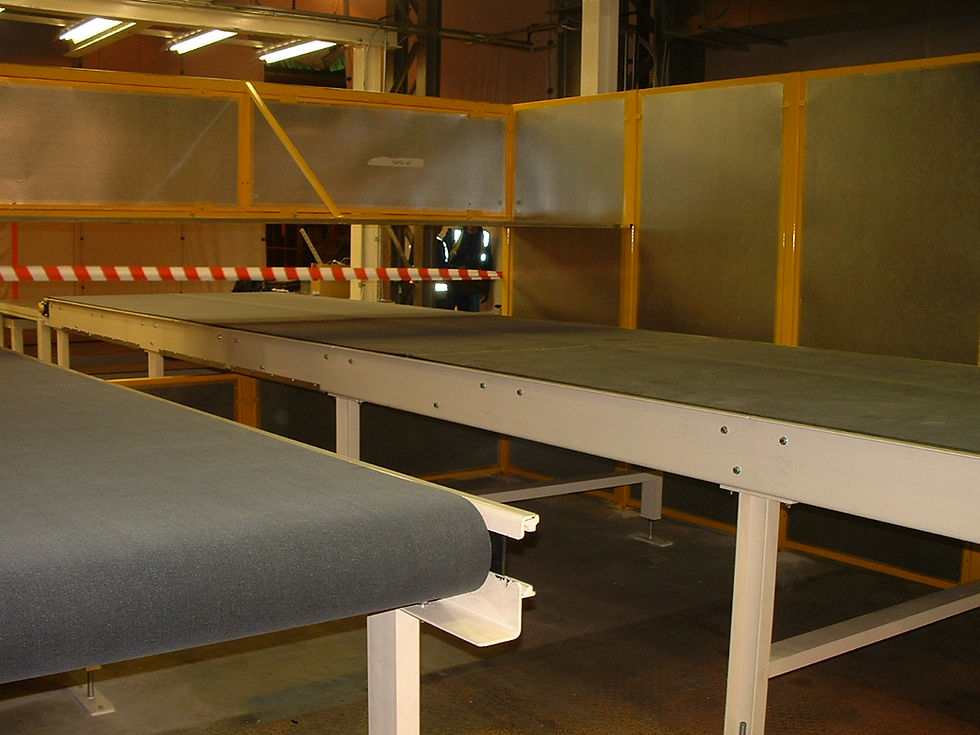
Suitable for varied or irregular product shapes, belt conveyors provide continuous support and are commonly used on inclines, declines, or where gentle handling is important.
Used in lower-complexity applications, gravity systems can provide cost-effective movement where powered control is not required.
No single configuration suits every operation. Effective specification begins with a detailed assessment of SKU profiles, throughput volumes, and future growth projections.

Integration and Scalability Considerations
Conveyor systems operate most effectively when integrated with broader warehouse infrastructure, including:
Warehouse Management Systems (WMS)
Barcode scanning and tracking technologies
Weighing and dimensioning equipment
Sortation or routing mechanisms
Planning for scalability is equally important. Modular conveyor designs can allow phased expansion as operational needs evolve, reducing the likelihood of disruptive reconfiguration.
Return on investment varies depending on baseline efficiency, labour structure, throughput levels, and project scope. Businesses typically evaluate automation projects based on operational continuity, risk mitigation, productivity improvement, and long-term adaptability rather than short-term savings alone.
A Measured Approach to Automation
For many fulfilment centres, conveyor systems represent a pragmatic entry point into automation. They provide structured material flow, improve process visibility, and create a foundation upon which more advanced technologies can be added if required.
This incremental approach allows organisations to manage capital expenditure responsibly while strengthening operational capability.
Engineering Expertise and Local Support
Successful implementation depends on thoughtful design and ongoing support. Working with experienced conveyor engineers can help ensure systems are specified appropriately for both current operations and future requirements.
MJE Projects, based in Nottingham, focus on bespoke conveyor system design for e-commerce and industrial environments across the Midlands and wider UK. By tailoring solutions to individual facility constraints and product profiles, engineered systems can be aligned more closely with operational objectives.
Quality management processes and structured maintenance support are also critical factors in ensuring long-term reliability within demanding fulfilment environments.
Building Operational Resilience for Modern Retail
E-commerce will continue to shape warehouse design priorities. Rather than viewing automation as a singular technology decision, resilient operators treat it as part of a broader operational strategy — balancing workforce capability, facility design, technology integration, and customer expectations.
Conveyor automation, when carefully planned and professionally engineered, can play a central role in that strategy.
The most effective systems are not those that promise dramatic transformation, but those that deliver consistent, scalable improvements aligned with real operational needs.


Comments